Jigsaw: Redesigning Core Tasking & Route Workflows
Duration
September - December 2024
Team
Kessel Run
Role
Product Designer
Project Summary
TL:DR
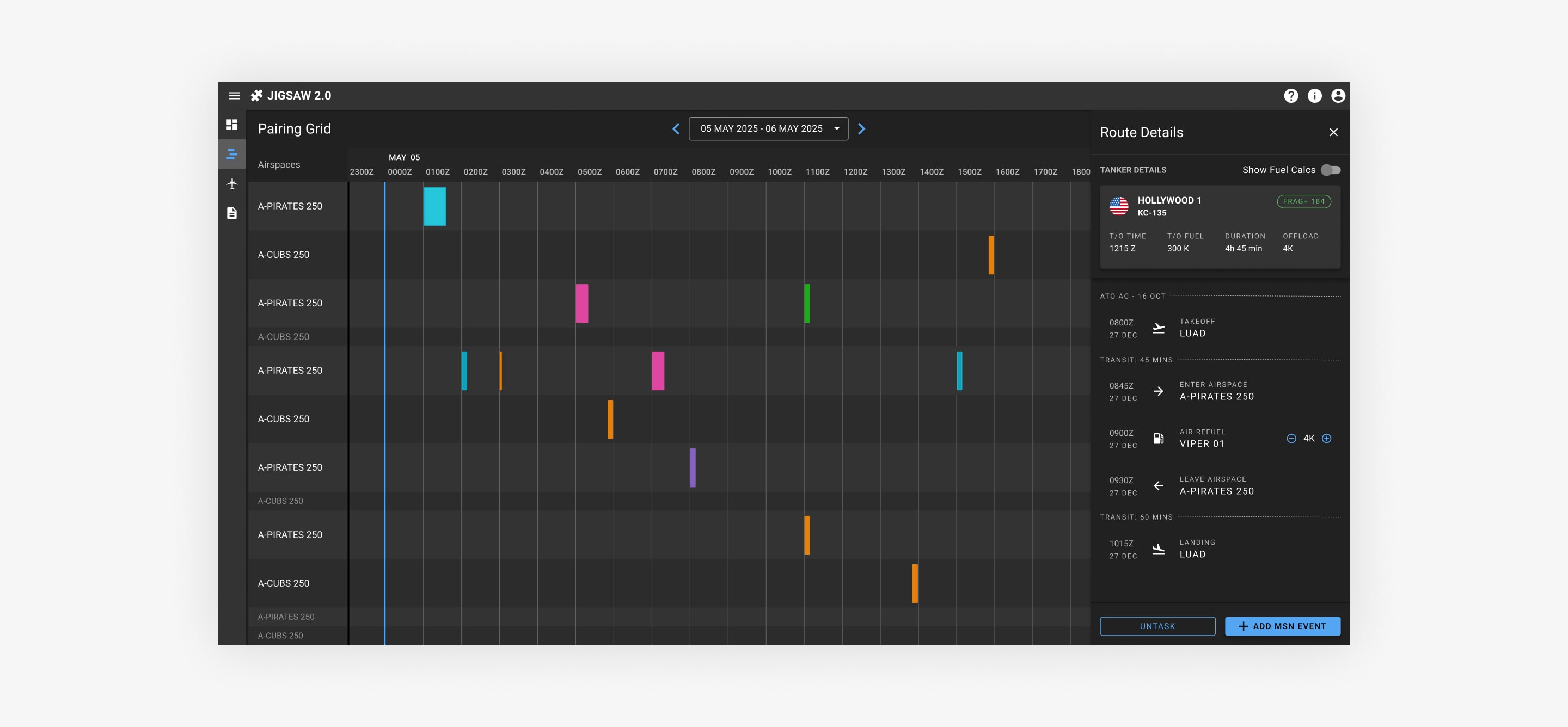
Jigsaw users were spending a significant amount of time navigating between tools and views to complete routine mission planning tasks. Critical information was fragmented across the product and external systems, forcing users to context switch, manually reconcile data, and lose focus during time-sensitive decision-making.
To address this, I partnered closely with product and engineering to redesign two core desktop surfaces: the AR Tasking Drawer and the Route Detail Drawer. Together, these efforts focused on centralizing mission-critical information, reducing cognitive load, and enabling users to complete planning and validation tasks without leaving context.
After shipping, users reported saving up to six hours per day, driven by fewer tool switches, faster access to relevant data, and more focused, efficient workflows.
Business Impact
75% Faster Tanker Planning
By integrating Jigsaw more deeply with Slapshot and surfacing mission-critical fields directly within tasking and route views, tanker planning time was reduced from approximately eight hours to two hours. This enabled faster decision-making and improved resource coordination during mission planning.
50% Reduction in Task Switching
Centralizing tasking inputs and validation within Jigsaw eliminated the need to repeatedly move between tools. As a result, users experienced a 50% reduction in task switching, allowing them to maintain focus and complete planning work more efficiently.
Improved Mission Validation Accuracy
Real-time validation and the addition of required mission fields significantly reduced validation errors. Missions were more consistently and accurately represented in Slapshot, which reduced rework, improved user confidence, and lowered overall frustration during planning workflows.
Project 1
AR Tasking Drawer Redesign
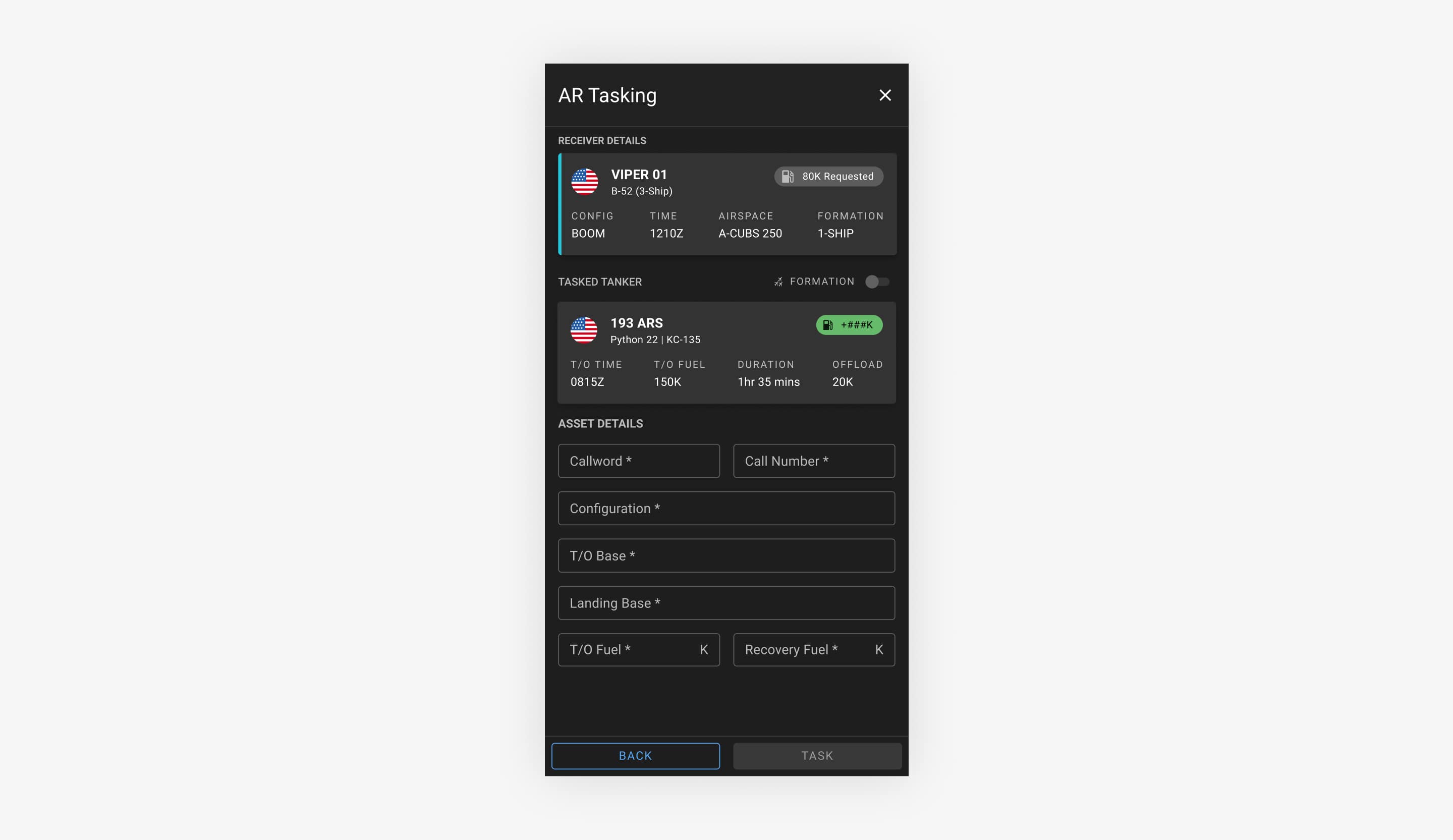
The AR Tasking Drawer played a central role in how users planned and executed their work, but it had become dense and difficult to navigate. Users were required to jump between multiple views and external tools to understand task requirements, dependencies, and status. This fragmentation made it hard to answer simple questions quickly and slowed down execution.
From a product standpoint, this meant that one of the most frequently used surfaces in Jigsaw was also one of the most cognitively demanding.
Research and user validation
To understand inefficiencies in AR tasking workflows, I spoke directly with ARCT through user interviews and design walkthroughs focused on how missions were created, validated, and updated across tools. These sessions revealed that tasking work frequently extended beyond Jigsaw, requiring users to move into Slapshot to complete or correct information that was already known elsewhere in the workflow.
A recurring point of frustration was the need to manually add the same mission prefix for every task. Because the prefix never changed, users viewed this step as repetitive and unnecessary. Any informational update required repeating the same process mission by mission, increasing effort and introducing opportunities for error. Users expressed dissatisfaction with having to leave Jigsaw to make changes that logically belonged within the tasking context itself.
These research insights helped clarify that the core issue was not tasking complexity, but fragmented ownership of shared mission data across tools. Validation with ARCT reinforced the need to centralize tasking-related updates within Jigsaw, reducing duplication of work and minimizing disruptive context switching during mission planning.
Exploration and Collaboration
I partnered closely with product and engineering to understand which information was essential at the moment of tasking versus what could be progressively disclosed. Through regular working sessions, we aligned on the core jobs users were trying to accomplish and identified where the current drawer was creating unnecessary friction.
Early design explorations focused on reorganizing information hierarchy and reducing visual noise. Some concepts emphasized flexibility and configurability, while others prioritized clarity and scannability. Engineering input was critical here, as performance and data availability influenced how much information could be surfaced without impacting responsiveness.
The design solution
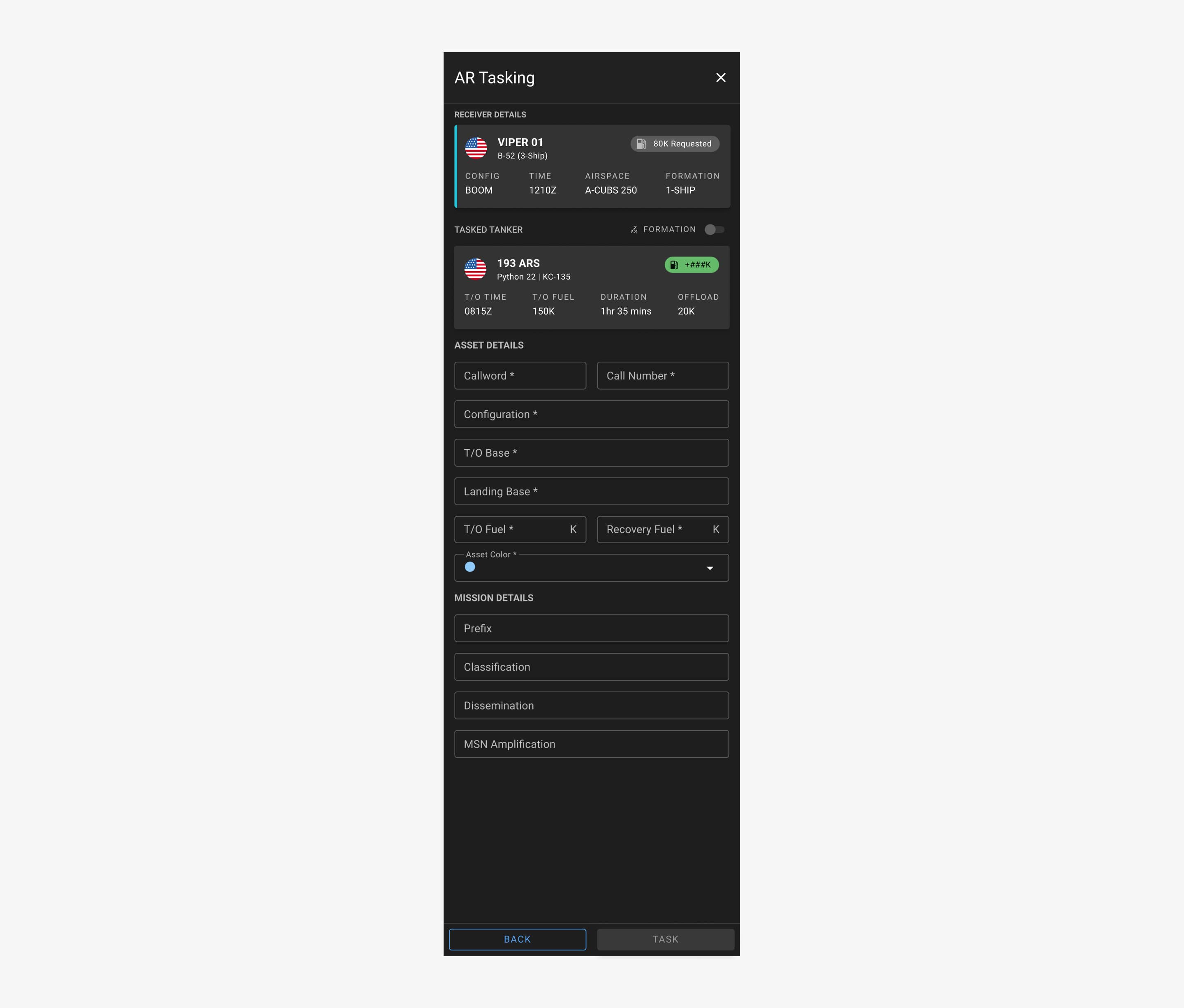
The redesigned AR Tasking Drawer brings the most critical task information into a single, structured view. Instead of forcing users to navigate away to understand context, the drawer now supports quick scanning, clearer status awareness, and easier progression through tasks.
By tightening the hierarchy and reducing unnecessary transitions, the drawer became a place where users could confidently take action without losing focus. This shift played a key role in reducing time spent jumping between tools and contributed directly to the overall time savings reported after launch.
User feedback
When reviewing design concepts that shifted tasking responsibilities into Jigsaw, ARCT users responded positively to the reduction in manual steps. They appreciated being able to manage shared mission information in one place rather than repeatedly re-entering the same details in Slapshot.
Users specifically called out the relief of no longer having to leave Jigsaw to add or update prefixes for every mission. Centralizing this information reduced repetition, minimized errors, and made the tasking process feel faster and more reliable within their existing workflow.
Project 2
Updating the Route Detail Drawer
The Route Detail Drawer was another high-frequency surface where users needed to understand complex information quickly. Previously, route details were spread across multiple areas of the product, requiring users to piece together context manually. This made route planning and validation slower than necessary and increased the likelihood of missed details.
The opportunity here was to consolidate route information into a single, reliable source of truth that users could trust during time-sensitive workflows.
Research and user validation
To better understand where friction existed, I spoke directly with ARCT through user interviews and design walkthroughs focused on real mission-planning workflows. These conversations helped surface how often users needed to reference route timing and how disruptive it was to leave Jigsaw or mentally reconstruct details across tools just to answer basic questions.
We tested early design iterations with ARCT and gathered feedback throughout the process. Users consistently emphasized the importance of seeing route time clearly and immediately, especially during time-sensitive planning, reinforcing the need for a simpler and more reliable presentation of route information.
Exploration and Collaboration
I worked closely with product to clarify what “route clarity” meant from a user and business perspective. Engineering collaboration was especially important in this phase, as route data was sourced from multiple systems and had to remain accurate and performant as users interacted with it.
Design exploration focused on presenting complex route data in a way that felt approachable and predictable. Rather than overwhelming users with everything at once, the goal was to surface the most relevant information first, while still allowing deeper inspection when needed.
The design solution
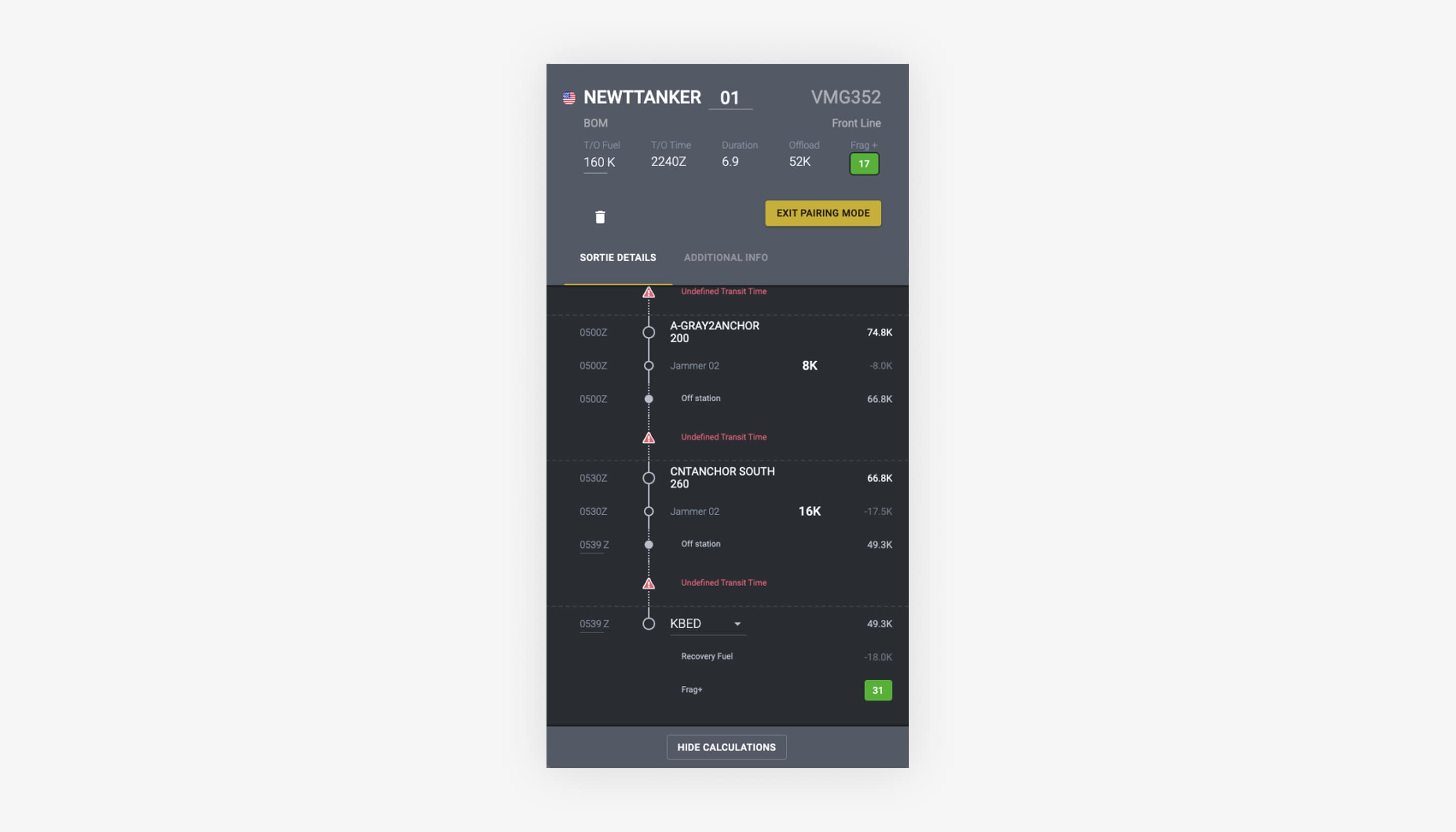
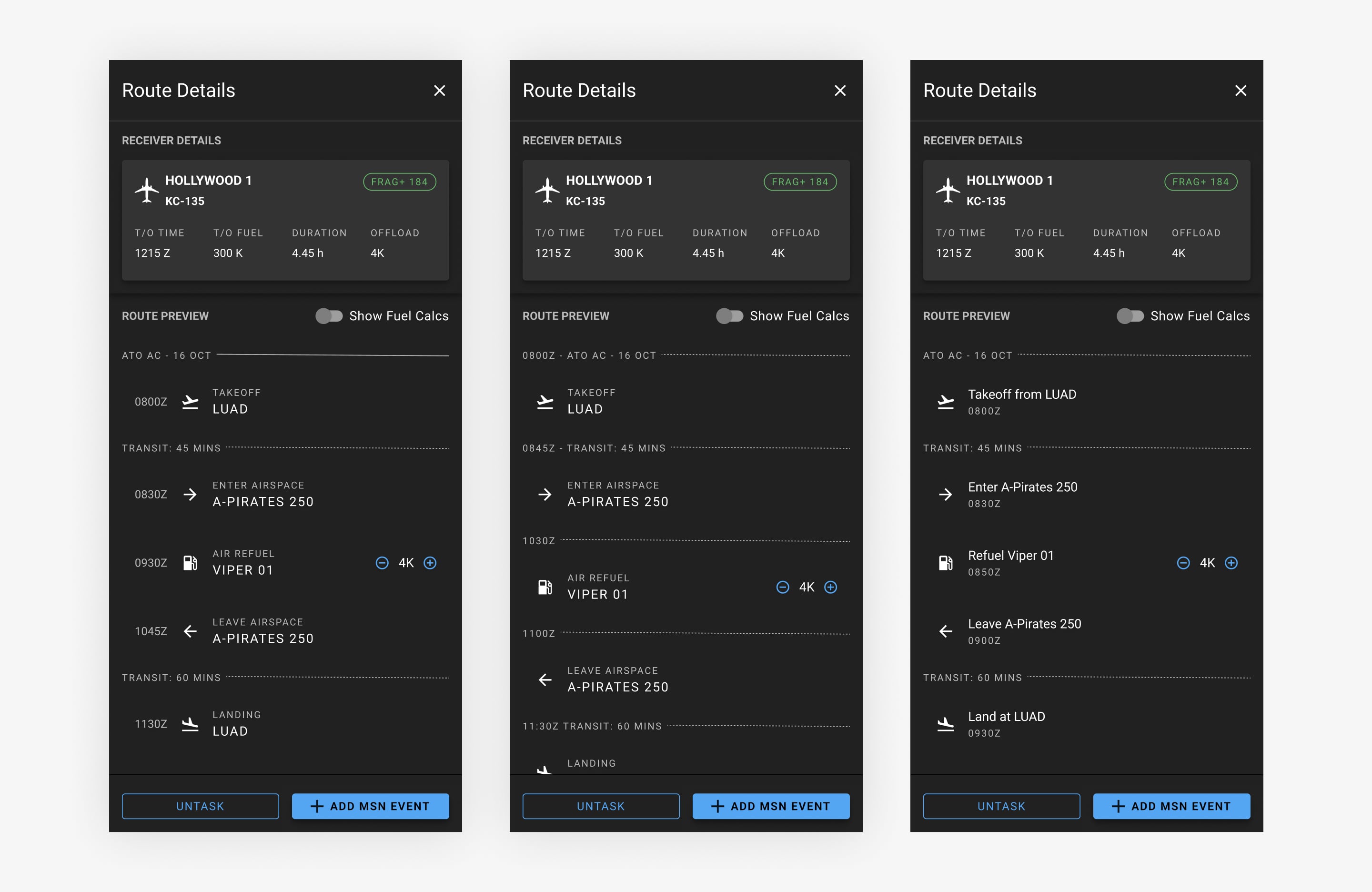
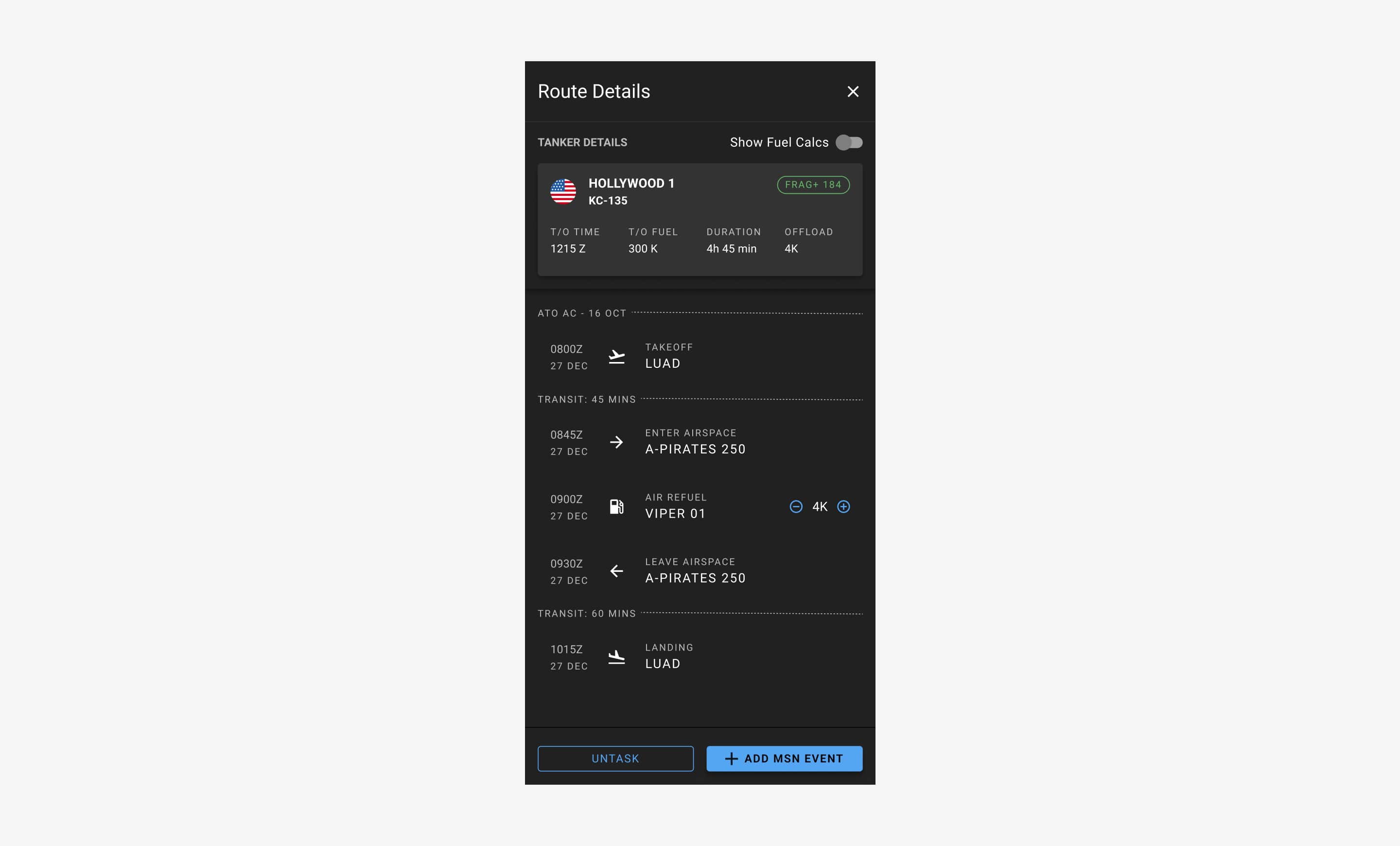
The updated Route Detail Drawer centralizes route information into a single, cohesive experience that supports faster validation and decision-making during mission planning. The redesign focused on improving clarity around mission events, particularly time, which research showed was frequently misunderstood in the previous subway-style representation.
To address data gaps that previously forced users to leave Jigsaw, key mission fields such as prefix, classification, distribution, and color were integrated directly into the drawer. This ensured missions could be validated in real time without requiring users to recreate or correct information in external tools like Slapshot.
The solution also introduced persistent inputs for shared mission attributes, reducing repetitive data entry and minimizing errors across tasks. By aligning the drawer’s structure with how ARCT users think about routes and tasking, the experience reduced fragmentation and eliminated unnecessary context switching.
Together with the AR Tasking Drawer improvements, this redesign contributed to a measurable reduction in daily workflow time and increased user confidence when planning and validating missions.
User feedback
When testing the redesigned Route Detail Drawer with ARCT, users responded positively to how quickly they could understand route timing at a glance. Several users specifically called out how much easier it was to see and reason about time without navigating away or piecing information together manually.
The simplified layout reduced cognitive load and made the drawer feel more dependable during planning. As a result, users expressed greater confidence in using Jigsaw as their primary source of route information instead of relying on external tools.
Final Thoughts
This work wasn’t about adding more features to Jigsaw. It was about removing unnecessary friction from workflows users rely on every day.
Through conversations with ARCT and close collaboration with product and engineering, it became clear that the biggest inefficiencies weren’t caused by complexity, but by fragmented ownership of mission data and frequent context switching between tools. Users knew what needed to be done, but the system made it harder than it needed to be.
Redesigning the AR Tasking Drawer and Route Detail Drawer helped centralize critical information, reduce repetitive work, and allow users to stay focused while planning and validating missions. Seeing users move faster and with more confidence reinforced the value of designing around real workflows and validating decisions early and often.
Working within technical constraints and alongside cross-functional partners was a reminder that the best solutions usually come from simplifying the system, not expanding it.